“Every language has a right to be spoken, even if only five people speak it, because it is democratic and a human right.” (Ngugi wa Thiong’o)
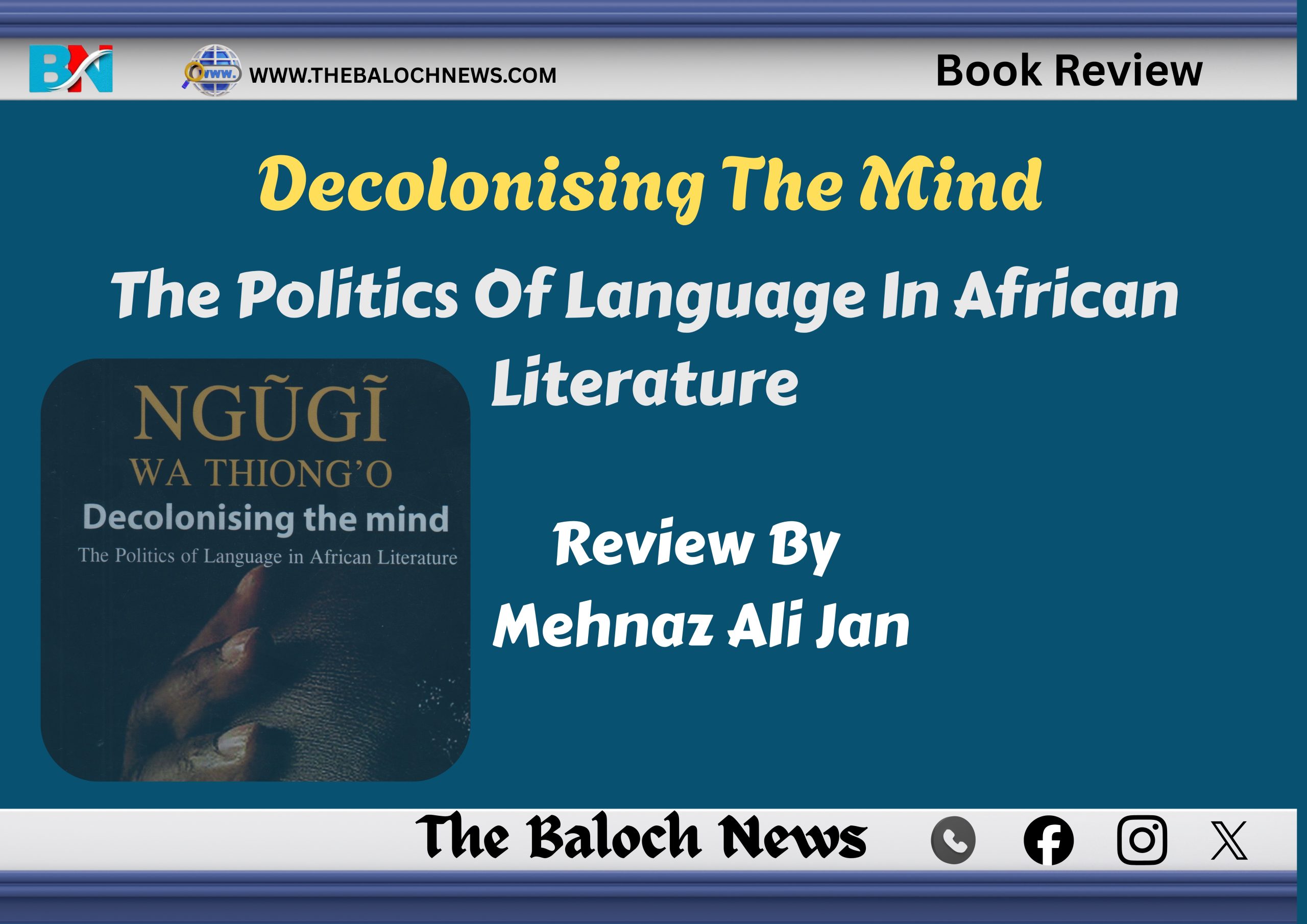
The book “Decolonising the mind: the politics of language in African literature” is written by a Kenyan writer, Ngugi wa Thiong’o, who was born in January 5, 1938. He is one of the most influential writers, novelists, playwrights, essayists and a post-colonial theorists. He firmly upholds writing in African native language such as his own Gikuyu rather than colonial languages. His various publications include Weep Not Child, The River Between, A Grain Of Wheat, Petals Of Blood, Devil On The Cross, Homecoming and many more.
The book debated book contains 114-120 pages, written in English and has been translated into several languages including French, Spanish, Portuguese, Italian, Arabic and some African and Asian languages and got published in 1986.
Furthermore, to fully grasp the book’s title, one must first understand the concept of colonisation.
Colonisation refers to the subjugation (process of bringing something under control) of one country or nation by the other militarily advanced and a powerful country or nation. The colonizer usually rule over the weak nations, form colonies and exploit their resources for its own benefits. And the colonized countries or nations undergo various changes such as political, economic, cultural and social changes in the subjugated country.
Decolonisation is its opposite which is the process by which colonies become independent of the colonizing country. It is about cultural, economic and psychological freedom of the native people with the achievement of national sovereignty.
Moreover, the book is the combination of essays regarding language and its constructive role in national development, culture, history and identity. The book is a collection of four essays namely:
1- The Language Of African Literature
2- The Language Of African Theatre
3- The Language Of African Fiction
4- The Quest For Relevance
1. The Language of African Literature:
In this essay, the writer argues that language is deeply tied to culture and identity. He explains how colonial education system pushed African writers to use European languages, which gradually distanced them from their own people and traditions. Ngugi believes that writing in colonial languages reinforces mental domination, while using African languages helps reclaim cultural pride and restore a true African perspective in literature.
2. The Language of African Theatre:
The author focuses on theatre as a communal art form that directly engages the people. He describes his experience with community theatre in Kenya, where performances were done in local languages and reflected real social issues. This essay shows how African theatre could become a powerful tool of resistance and education when it speaks the language of the people, rather than the language of the colonizers.
3. The Language of African Fiction:
Here, Ngugi examines African novels written in European languages and questions whom these works truly serve. He argues that when African stories are told in foreign languages, they often cater more to international audiences than local readers. By advocating for African languages in fiction, Ngugi emphasizes the importance of authenticity, accessibility, and preserving indigenous storytelling traditions.
4. The Quest for Relevance:
This essay discusses the responsibility of African writers and intellectuals in post-colonial societies. Ngugi stresses that literature should not exist in isolation but should address the real struggles of ordinary people, such as oppression, inequality, and cultural loss. He calls on writers to remain relevant by engaging with their communities and contributing to social change rather than seeking approval from Western institutions.
However, the main arguments of the book cover:
•Language as a tool of colonial domination
• Colonial Alienation
• Reclaiming identity through indigenous (native) languages
Language as a Tool of Colonial Domination:
Ngugi argues that colonial powers didn’t just occupy land but they also used language to shape thought and identity. He mentions that when African intellectuals write in European languages (English, French, Portuguese), they are participating in a continuation of colonial influence because these languages carry the worldviews and values of the colonizers.
Colonial Alienation:
He introduces the idea of “colonial alienation” that the psychological estrangement that occurs when a people’s native languages and cultural frames are displaced by colonial languages. This alienation, he claims, leads to a loss of cultural grounding and self understanding.
Reclaiming Identity Through Indigenous Languages:
Ngugi passionately defends the use of African languages in literature, education, and culture, arguing that they are essential for genuine cultural expression and liberation. Language, for him, is not neutral instead it’s deeply political and tied to a people’s history, memory, and resistance.
Apart from this, this book talks about the implementation of English as the official language by the British in the colonized countries like Africa, and its impacts as this broadens the gap between the use of mother tongue Gikuyu and English. He started writing his works in Gikuyu since 1977. Since then he was confronted with a question, particularly, in Europe about the reason for his writing in Gikuyu language. His writing in mother tongue was perceived as an abnormal act. He shares incidents of humiliating experiences undergone by the Gikuyu speaking children in school and different types of punishments were given.
This reflects how colonialism shaped African thinking through language and that colonial rule didn’t end with political independence as it survived in people’s minds – especially through education system that dominated European languages and cultures over African ones. For him, language is not merely a means of communication but also it carries culture, identity, memory and history. To decolonise the minds, therefore, means reclaiming African language using them to tell stories.
In short, Ngugi believes his writing in his native language is a part of the anti imperialistic struggles of Africans, especially Kenyan people. He does not want to see the future generation, specifically, school children growing up in the imperialistic tradition. He desires to see Kenyan national languages having a literature which reflects the rhythms of the languages as well as the native social nature, plus their struggle with nature and culture. Because it will benefit the future generations of Kenya to live in harmony; they can learn other languages and could enjoy revolutionary elements in the other languages without any complex about their mother tongue, environment and themselves.
Thus, “Decolonising the Mind” is a must-read for students, writers, scholars, political workers and others who are interested in understanding the lasting effects of colonialism on language and culture. We can touch it with the ongoing crises in Balochistan as well.