
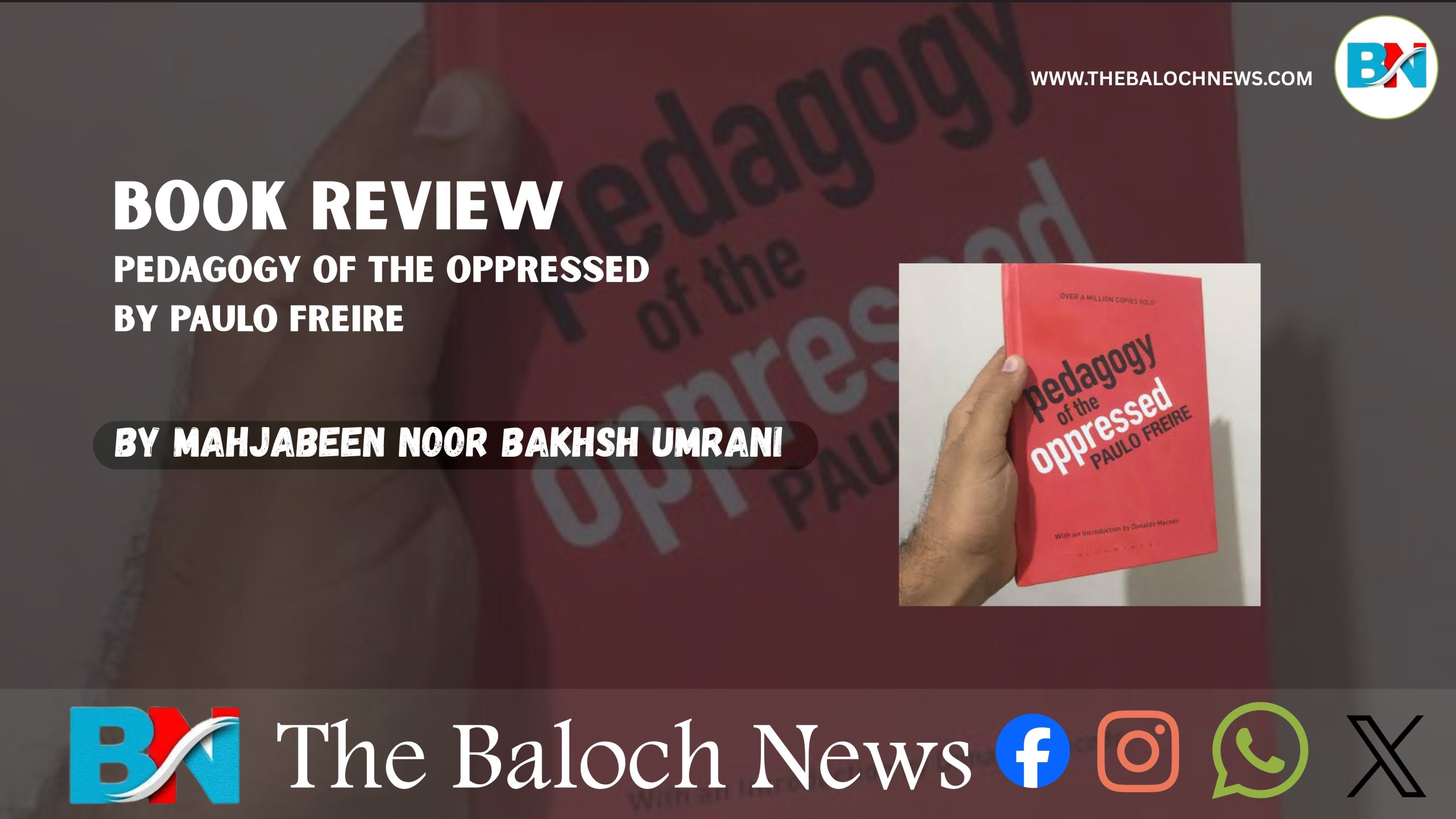
Why is school such an awful experience for so many kids, and why do young people seem uninterested in learning? This is because of the design of education. According to Paulo Freire in his book “Pedagogy of the Oppressed” (1970), schools do not promote freedom. He challenges the traditional methods of education based on oppression and instead promotes an education for liberation.
Paulo Freire was a Brazilian educator and philosopher. He studied law and philosophy, later becoming a teacher. He then developed his own theory on education and oppression, which he outlined in his masterpiece Pedagogy of the Oppressed.
Freire introduced a concept of education called the “banking model,” where students are treated as empty objects with zero knowledge, while teachers are seen as the only source of knowledge, depositing it into students’ brains.
Freire criticized the modern-day education system, which he compared to depositing money into a bank. He believed that information is always detached from real-life experiences, which makes learning boring. Such a design does not encourage youth to love learning but makes them more or less escape from it. To some extent, he is right.
His theory is practical in our primary education system, where learning is based on theories only, with very little practical representation. Students are taught to memorize but not to analyze. It is hard to memorize things without visual representation, especially when information is detached from real-life experiences. That feels boring; thus, people are uninterested in learning merely due to the design of education. This is thought-provoking for a reader to know that this sort of education doesn’t develop people’s ideas about their own situations, nor does it help them to resist oppression against them.
Definitely, it’s not the end. Freire gives an alternative model of “problem-posing education,” based on dialogue and critical thinking, whose essence can enlighten the youth. Interestingly, he says education should not be about memorizing facts but about thinking, questioning, and understanding the world. There should be proper communication and a learning procedure between students and teachers. It allows students to be critical in any situation, learn about real-life problems, and search for their resolutions.
This proper communication is dialogue, which is essential. Freire believed that education is never neutral: it either maintains oppression or leads to liberation. His aim was to develop what he called critical consciousness — the ability of students to reflect on their conditions and take action to transform society. In this way, education becomes a tool for freedom, not for oppression.