Education is an essential tool in mankind’s lives that can help people in many ways. It’s not just about acquiring knowledge; it may also be about growing morally, mentally, and physically. However, it helps us not only to find our life’s purpose but also equips us with the necessary abilities to fulfill it. The Islamic school of thought even views education as a means of assisting individuals in leading moral lives and creating a robust and just community. It emphasizes that reading and writing is secondary to the importance of improving oneself and building a decent community founded on Islamic values. Education increases people’s productivity and efficiency, which is pivotal for the growth of human resources. It produces knowledgeable, competent workers who can drive economic growth through training and knowledge. All things considered, it is an important component in producing skilled labour that advances and strengthens society.
Socioeconomic dynamics and educational issues are made more intriguing by the undermined area such as District Kech, especially its rural areas like Buleda and Tehsil Mand. Its socioeconomic environment is shaped by some major factors. The literacy rate is one of the indispensable metrics; unfortunately, Balochistan has one of the lowest rates in Pakistan, as per the report of the Pakistan Bureau of Statistics (PBS), with rural areas frequently having even lower rates than urban areas. This gender disparity gap in educational attainment reveals the need for a more thorough comprehension of the variables that are affecting it. There are various reasons why particular rural regions are overwhelmed in the education sector.
First of all, it illustrates the larger difficulties that rural populations confront in getting access to high-quality education. The World Bank’s data on education in Pakistan highlights these differences in educational attainment between urban and rural areas, with inadequate resources and poor infrastructure. Similarly, regions like Dasht are a microcosm for examining these intricate relationships because of their socioeconomic perspective, which takes into account elements like low income levels, restricted access to schools, subpar infrastructure, and security concerns influencing schooling, thereby increasing the female dropout ratio.
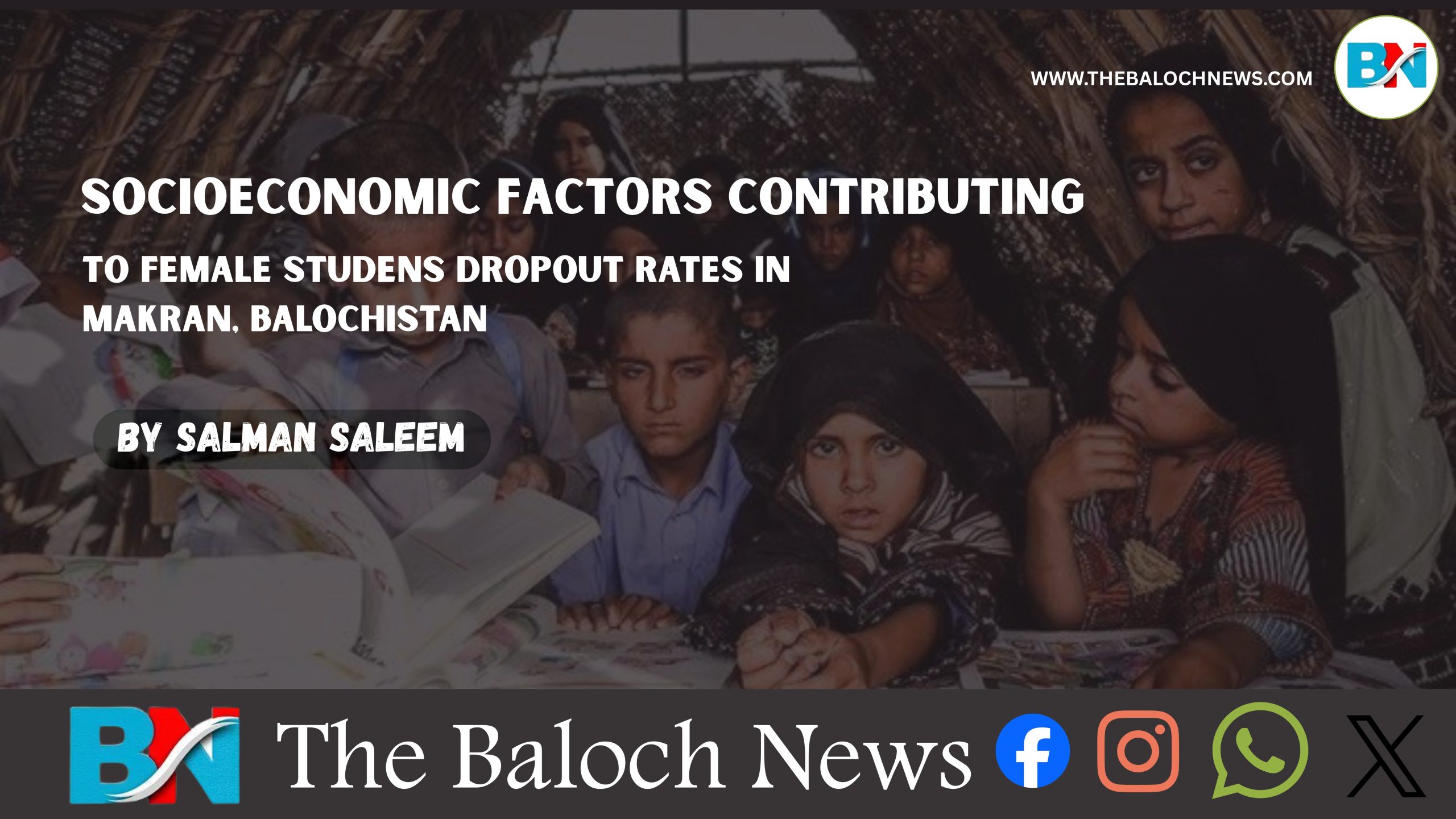
Key statistics-wise, Tehsil Buleda’s dropout rates are noteworthy, especially for girls. Due to economic factors, limitations, and cultural considerations, girls in rural Balochistan have greater dropout rates as compared to males. The major causes include ghost schools, marginalized masses, and uncertain law and order. This is shown by studies conducted by NGOs such as the Alif Ailaan Foundation and local education officials. Multiple economic causes contribute to the high percentage of female dropouts from government girls high schools in affected areas. Poverty is the predominant element in these regions, requiring immediate measures to alleviate the impacts of girls’ school dropout and control financial restrictions. Families with scarce resources and prioritizing males’ education favor the education of their sons over their daughters. Manifold studies demonstrate that underdevelopment is the root cause of this poverty gap, lending credence to the distinctive factors in rural girls’ school dropout rates.
The female education phenomenon in an underdeveloped province like Balochistan is further exacerbated by the lack of access to high-quality facilities, skilled instructors, and the undermined rural demography. Girls’ decisions to continue their education may be influenced by a lack of female teachers, ineffective transportation, and ill-equipped schools. Several studies underline how crucial full-fledged structures and quality education are to keeping girls in school, based on the World Bank report (2020).
In order to address these socioeconomic factors, an integrated approach is needed—one that includes focused interventions like community awareness campaigns to shift attitudes toward girls’ education, scholarships for girls from low-income families, and investments in the education sector to provide quality education for a better future. For such initiatives, the role of concerned authorities is significant if they bring these issues under consideration.
To conclude, education remains a powerful tool that shapes individuals and societies, helping people grow morally, mentally, and socially while guiding them toward a meaningful life. To address these problems in the affected regions of Balochistan, dismantling induced challenges, poverty, and unemployment demands quick action to meet the required facilities. These roles are inevitable for indigenous communities where they live with zero basic necessities, still struggling in their quest for education. These causes highlight the urgent need for attention toward girls’ education so that they can receive the same opportunities as boys from the federal government and the current provincial government. By addressing these issues through awareness campaigns, better school facilities, financial support for low-income families, and improved access to quality education, it becomes possible to reduce dropout rates and build a stronger, more educated, and more balanced society.