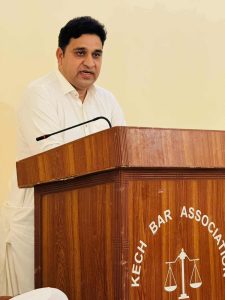
“You people, sitting out here, will certainly second my words that whenever we are encountered with a problem, the first person we would call would be Jadain; be it any time of the day or midnight, the first person who will respond and reach out to you will be none other than Jadain,” stated Mehrullah Gichki, when ensuring his “full support to Jadain as the candidate for the Makkuran-Lasbela seat” in the upcoming bar council elections. He further addressed to the convention held in support of Mr. Dashti. “And to celebrate his candidature, I announce a feast in his honor.”
Though such a debate and words leave a deep impact upon the audience, especially young lawyers new to the profession to decide and vote for anyone, but it should not be the only reason to do so. Voting is a responsibility; one should not cast vote merely because a candidate is approachable and humble. Before diving into a detailed discussion, let’s understand: What is Balochistan Bar Council? What are its responsibilities? And how are its elections held?
Bar Councils in Pakistan are statutory bodies formed under The Legal Practitioners and Bar Councils Act, 1973. Each province has its own council, and further, at the district level, other bodies are formed as well – reckoned as District Bar Associations. The members of these councils are elected after every five years, which includes the Advocate General as an ex officio member and other members, numbers vary province-wise, with Balochistan having 8 seats, besides ex officio, elected by advocates on their roll. The most important part of this law is Section 9, which defines the functions of the Bar Councils. These functions include admitting persons as advocates, deciding cases of professional misconduct, safeguarding the rights and privileges of advocates, and promoting and suggesting legal reforms.
The aforesaid objectives have a deep impact on society and the legal fraternity in Balochistan. It is heartening to see the youth distancing themselves from their core responsibility towards building strong legal bodies in province to safeguard the rights of the indigenous masses as a whole. The Balochistan Bar Council consists of 8 elected members, and these seats are further distributed among the districts according to the schedule provided in the Act. As discussed earlier, the outcome of these elections will certainly leave an impact on the legal fraternity and, overall, the Baloch society if one is not cautious prior to casting his or her vote.
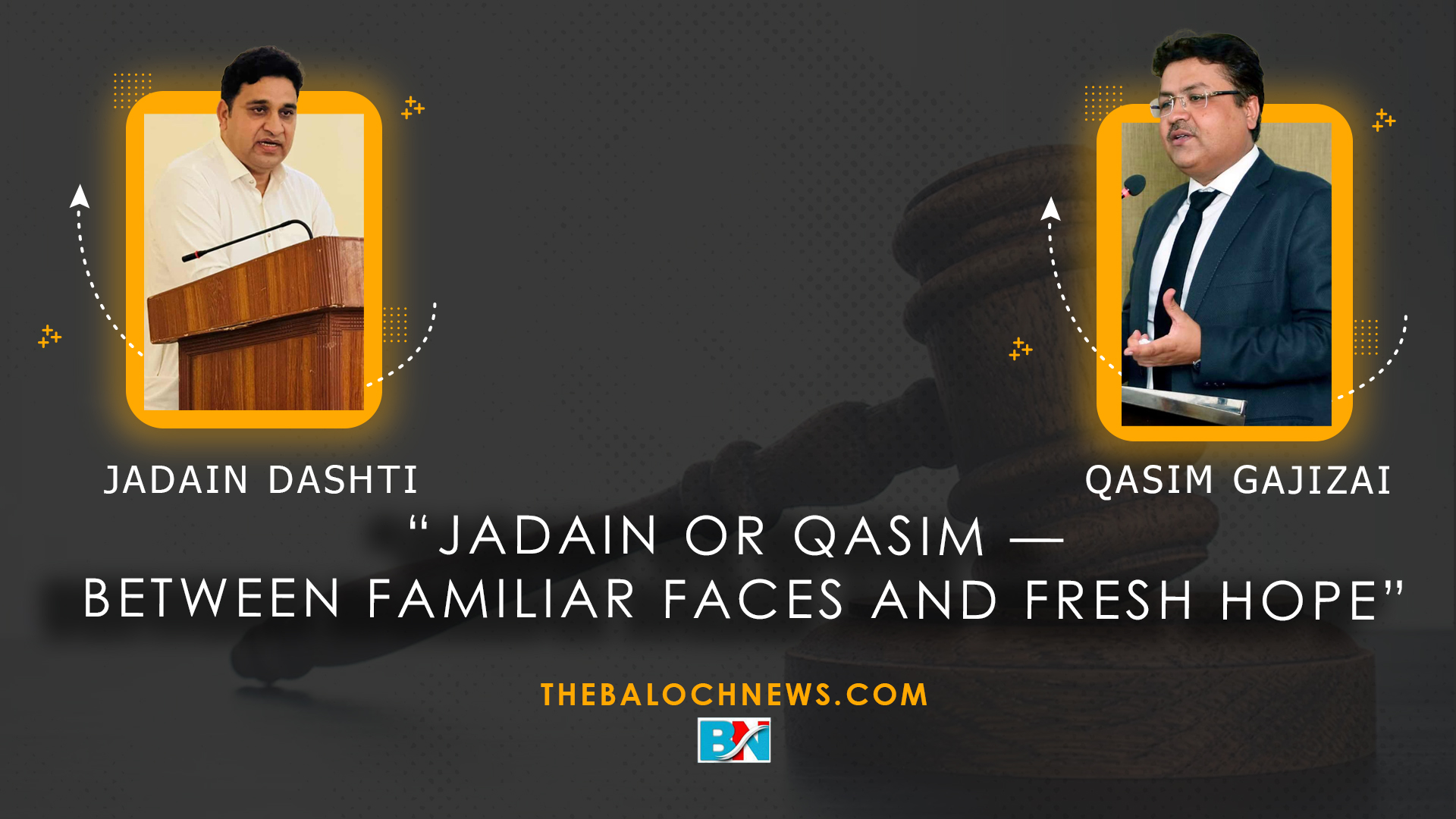
Due to the establishment of a law college in Turbat, the number of advocates practicing in Kech has increased, making it one of the highest numbers in the region—133 in total. Certainly, a high number, though a considerable portion is not engaged in practice, but being on the roll makes them eligible for casting their votes in the elections. In the current polling, two of the candidates, Jadain Dashti and Qasim Ali Gajizai, are from District Kech, both having their bases in the same area.
Apart from that, while contesting elections, advocates are divided between two major groups — the Hamid Khan-led Professional Panel and the Asma Jahangir-led Democratic Independent Panel. It is pertinent to mention here that within Kech district this division was never strong; in fact, the Independent Panel had no existence in the Makkuran region prior to the candidature of Mr. Qasim Ali Gajizai. Interestingly, in the previous term, Mr. Gajizai contested the elections under the Professional Panel and was elected as a member.
This time, for a second term, when the candidature of the Professional Panel was not available to him — as the panel announced Jadain Dashti for the Makkuran-Lasbela seat — Mr. Gajizai departed from the Panel and joined the Independent Panel in a sudden move to build a notion that he is favorite to win this election as well due to the environment enjoyed by the Independent Panel in rest of the country. But as of today, he is still a member of the Balochistan Bar Council on the seat of the Professional Panel, from which he never resigned despite joining the Independent Panel. It was an ethical duty upon him to resign from it prior to announcing his decision to join the other panel.
It was a strategic move and gave him the chance to compete and gain support, but in the end, what truly matters is support from within the legal fraternity. Rather than opting to gain support from lawyers, Mr. Gajizai pursued an unethical and unprofessional approach. He began his campaign on party lines and decided to involve the National Party (NP) in it. Consequently, Mashkoor Anwar led the campaign for Mr. Gajizai, and soon all advocates were approached through family members, party heads, and, in many cases, through the Mayor of Turbat, Balakh Sheir Qazi. Despite the fact that this was neither a general election nor a local government election, these figures involved themselves in the campaign and created an environment of distrust and division among fellow advocates. These moves not only deteriorated the environment for a healthy campaign but also placed National Party workers in awkward positions, as the likes of Advocate Nazim Uddin, Advocate Kahoda Inayatullah, Advocate Peer Jan, and many others, affiliated with the NP, who publicly vowed their support for Jadain Dashti.
Usually, in other provinces, it is observed that lawyers are not only affiliated with political parties but also cast their votes in bar elections according to their party leadership’s directions. However, in District Kech, although lawyers have been politically affiliated, in bar council elections they have always prioritized the lawyer community and have never been part of such divisions. Their loyalty has always been with the Bar other than with their mother political parties because, as lawyers, they have maintained their independent identity – in other words, they have separated bar politics with their party politics.
Yes, the rest of the provinces can afford this division on party lines due to the higher number of advocates, but in Balochistan — especially in a remote area like Kech — such division is unaffordable. It will certainly have drawbacks for the legal fraternity. Unity is everything; it must certainly continue.
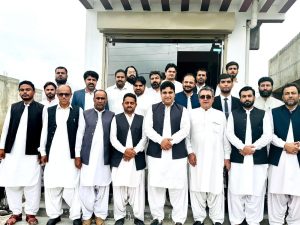
On the other hand, Jadain Dashti positioned himself among the legal fraternity, and his campaign was entirely supported by advocates only, such as Mehrab Khan Gichki, Kahoda Inayatullah, Majeed Dashti, Mehrullah Gichki, and many others. Mehrab Khan Gichki, being one of the senior-most lawyers with a deep understanding of Balochistan’s political landscape — especially of Kech district — provided unequivocal support for Jadain Dashti.
Prior to this piece, I interacted with him in detail about this term’s campaign and his reasons for supporting Jadain Dashti. He stated:
“As professional advocates, we want to build strong legal bodies that align with the needs of the legal community and the Baloch society. We don’t have any personal grievances against the other candidate, Mr. Gajizai; in fact, it was for the same reason that we chose him as our candidate in the previous term — and interestingly, Jadain Dashti was the one who led his campaign. But upon being elected, Mr. Gajizai completely distanced himself from the Bar and its genuine issues. Rather than bringing about real change in the Bar Council, he took initiatives that were entirely against the legal fraternity.”
Mr. Gichki continued, “As far as Jadain is concerned, I see no one other than him who could work for the legal fraternity and understand the Bar politics. He has access to the majority of departments, which puts him in a better position to do everything required for the legal community. Another thing I admire about him is that he is totally neutral and approachable whenever one needs him. So, in simple words, he will not distance himself from the real issues of the Bar and will certainly work for its betterment. One more thing — as I have said openly many times — we don’t see anyone else at this time better suited for us than Jadain, but it doesn’t mean we’ve given him the liberty or a clean chit to act against the interests of the legal fraternity. If he ever does so — though I truly hope he never — I will be the first to categorically call him out and criticize him.”
While concluding his remarks, he said, “See, one has to understand that this seat is not for personal gain or interest; it is meant to serve the needs of the legal fraternity and the Baloch society. It is a responsibility vested upon him, and if he does not serve it properly, in the future he will neither be re-elected nor retain his status in society. We are investing in him so that he invests back in the legal fraternity and the society at large — and when he leaves the office, he leaves behind a stronger Bar Council.”
Now that the elephant in the room is dealt with, let’s understand what the young generation should know before voting — why they should vote, and for whom. The younger generation has to understand that change is inevitable — it will happen. The seniors sitting with us will eventually depart, and the younger generation will fit in their shoes. So, before casting their votes, they must be vigilant and understand who will bring real change to the structure and development of the Bar.
There are countless things that can be done — already being done in other bar councils — such as scholarships being awarded, training programs being conducted, stipends given, development schemes initiated, medical care given, practical implementation of lawyer protection act is safeguarded, and more. So, these elements should be in mind prior to casting the votes. But the most important question is: will the candidate truly represent the legal fraternity of Makkuran-Lasbela? Below are some points we must consider before casting our votes:
Is the candidate approachable?
Is he known and respected among the legal fraternity?
Does he possess legal competence?
Does he understand Bar governance?
Is he capable of maintaining integrity under pressure?
Will he represent us on all platforms?
In the current situation, Mr. Dashti seems to possess all these traits — unlike Mr. Gajizai, who has formerly been elected to the same seat but whose tenure is entirely forgettable except one thing, that he was the one due to whose efforts, the interviews for High Court Licenses were held in Turbat via video-Link and Bar Vocational Course training were too held in Kech.
Another concerning issue with bar elections is that candidates rarely showcase a clear plan or program in their election campaigns. Beyond the warmth of such gatherings lies a deeper reflection on our electoral culture. In most bar elections, the focus too often drifts toward lavish dinners, social gatherings, and personal gestures, while discussions on plans, policies, and institutional reforms take a back seat.
Lawyers, both seniors and juniors, are drawn to social charm when they should be drawn to professional substance. For this reason, when I sat with Mehrab Khan Gichki and inquired him about these cultures as mentioned, he categorically admitted it and further suggested that such changes are inevitable. “Yesterday, there were only a few advocates, so our focus was on unity and coordination. But today the scenario has changed, and going forward, the focus will certainly shift to quality. There’s also a big responsibility on the youth — they should be the ones to fight for these changes. They have a voice, and they must raise it.”
Moving ahead with Mr. Gichki, he explained further that he believes Bar Council elections were limited to the Bar only — it’s not like a general election. “If no plan is presented, it is okay; it’s not worrisome. What matters the most is whether the candidate has the courage to abide by the rules of the Bar Council and act upon them? That is everything, because these plans and programs are already written in the Bar Council rules, so it doesn’t matter if one showcases them in their campaign. What matters is implementing them.”
When the same questions were put to Mr. Dashti, he willingly acknowledged them and further stated: “I will certainly arrange capacity-building and training programs. I will ensure that funds are allocated to each area; hence, whatever is required and I am obligated to perform, I certainly will. Let me make one thing clear — I have no personal interest or agenda. I have only chosen to contest the election to serve the legal fraternity and society. It will not happen on my watch that Makkuran-Lasbela, the seat to which I am contesting elections, remains unrepresented at any forum. Indeed, I will most certainly represent Makkuran and Lasbela to the best of my capacity and give no chance for complaint.”
Bar elections are part of the reform-bringing body in any province – including Balochistan. But over the ages, what has been missing is abiding by the duties of the elected members once the elections are over – especially in the Makkuran region. What is a watch-scene for us – both as professional advocates and part of the same society – is whether we get to see a change this time or yet another tenure of the repetition-cycle? Considering the campaigns and the contesting candidates, what we can expect is positive, but the term itself will speak once the elections are over – whether followed by a change in the set-up, or yet another disappointment on the face of the legal fraternity back in Makkuran.