
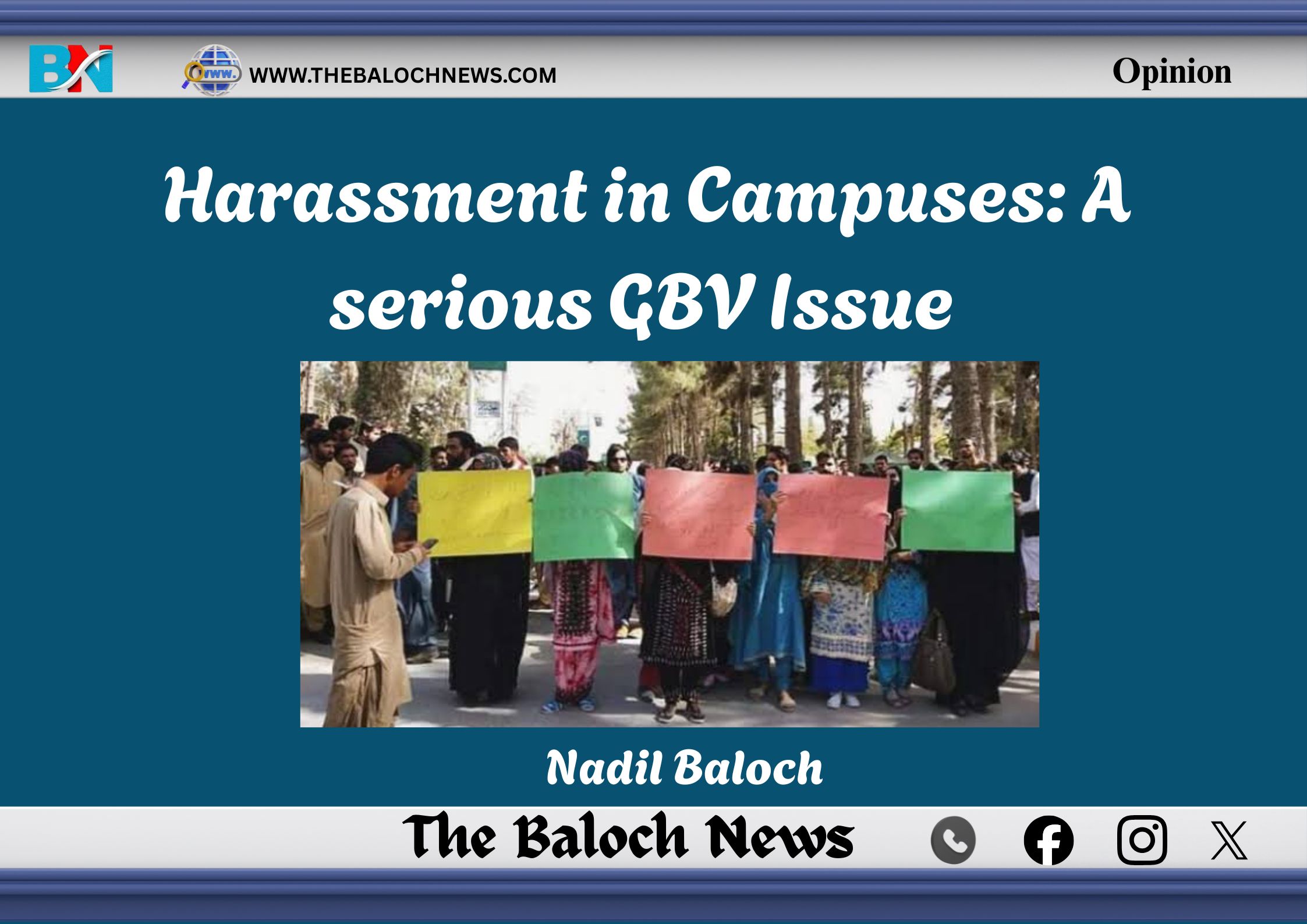
Shabana*, a 17-year old girl with a dream for higher education, and job, got admission at university. She was always called by the Head of the Department in his office. As a new student, she always obeyed the orders and listened to irrelevant questions which made her uncomfortable though. After coming from the office, the students inquired her the reason for calling, and she would reply: “No reason”. With the passage of time, gossip started among students and colleagues about her. She heard different messages and words from the students which became very difficult for her to cope with. Disturbingly, she had to quit her study after giving mid-term exams – though she scored excellent marks. Her family questioned her the reason for leaving university, she could not express and started living at home and was psychologically disturbed. After some time, she was married though she was not willing and wanted to continue her studies, but the past experience restrained her from living at home. She was married at the age of 19 and today she has 3 children. Harassment has shattered her dreams for higher education.
Getting higher education by females in Pakistan is a blessing because very few girls are able to reach universities for higher studies due to different social, political, economic, religious and institutional hardships. DAWN newspaper reported that the female literacy rate is 54% as compared to male, which is 73% and tertiary enrollment rate for females in Pakistan is 10% which is very low.
Situation in Balochistan is more devastating and discouraging female enrollment in higher studies. The overall female literacy rate is 44% and enrollment rate in higher education is very low. Eleven is the total number of universities in Balochistan with only one women’s university. Due to distance, very little number of females reach at universities fighting with various social, political, economic, institutional and cultural barriers. Reaching with hope and expectation goes in vain when they confront harassment from administrations, faculties and male students in campuses.
Though the scenario is changing due to education, harassment laws and awareness, they face impediments in their higher education. Harassment in university campuses became a very serious concern in Pakistan. The cases of The Islamia University of Bahawalpur scandal 2023, where high officials were involved in blackmailing females, Government College University Lahore incident in 2024, Sarhad University Islamabad Campus in 2026, Islamic College University Peshawar & Karakoram International University Gilgit 2020, Gomal University Dera Ismail Khan 2021 and University of Balochistan surveillance scandal 2019 are common examples in Pakistan.
These are the highlighted cases by the media and people but thousands of cases go unreported on a daily basis because of fear of honor and double harassment – harassing a woman because she reported the harassment. Very sad that the majority of the people involved in such activities are individuals with high profiles.
In Pakistan, there are harassment Acts such as Protection Against Harassment of Women at the Workplace Act, 2010 and Policy on Protection of Women Against Sexual Harassment in Higher Education Institutions (Revised 2025) to protect female faculties, staffs and students from sexual harassment in the campuses. Despite these laws, Aurat Foundation reported that up-to 95% to 98% of females face harassment during their school, college and university lives. This percentage clearly depicts that the harassment ratio in educational institutions is very high. While talking to a female faculty member of University of Turbat, she said, “Majority of the females have complained that they had been harassed by their colleagues and even our male faculty and administrative staff talk in such ways that we feel uncomfortable.” If the faculty members face such issues in the workplaces, what would be the situation for female students?
The female students face serious issues in terms of harassment by male counterparts. When a female student was asked, she replied, “Once I have finished my classes, and left for the café, some students came close to me and one of them offered tea even though I did not know him. This act made me aggressive and ashamed,” she said as though not expecting a better situation. “Another day, the same student asked me for psychology notes, though he was not my class fellow. This situation made me very ashamed and my whole body started trembling.”
When the students cannot express or face such a situation, they are compelled to leave their studies. Another female student said, “When I was newly admitted, some boys followed me wherever I went. I could not express and bear this situation, so I left my study and got admission in a girls’ college.”
Harassment in educational institutions is never accepted and expected, yet it became the normative structure of higher educational institutions of Pakistan. Confronting harassment is a huge problem but proving the harassment becomes another harassment when it is brought in notice. A female student said, “Bad experience is harassment but the worst experience is the questions asked by committee members about how I have been harassed. Committee members always, with male and female officials, ask such questions which discourage a female to report such cases again.”
Another participant said, “When we submit the applications for justice, our cases will be disclosed and we feel embraced among the students.” Harassment is the worst experience but hearing the news and gossip of the students becomes more disheartening and intimidating for females to report such issues next time. When a female faculty member was asked about implementation of laws, she said, “University of Turbat has a harassment committee and organizes awareness sessions, and cases are thoroughly investigated and justice has been provided to the victims.”
Taking legal actions became very difficult because influential individuals are involved in such activities and it discourages fathers not to send their children to universities. When I asked Shabeer* about the laws and legal actions, he replied, “When the harassment cases come from campuses, we tell the victims to negotiate with the culprits because such cases become burdens on us. Victims as well as defame the institution and decrease the female enrollments because of mistrust of family members in the institution.”
Enhanced harassment became a very serious concern in the campuses and difficult for females to fulfill the dreams of higher education. It is time to re-socialize our boys and men to deconstruct their mindsets so that their counterparts, females, may get a learning and friendly environment.
Note: The names of the participants are hidden or changed because of sensitivity and maintaining confidentiality.