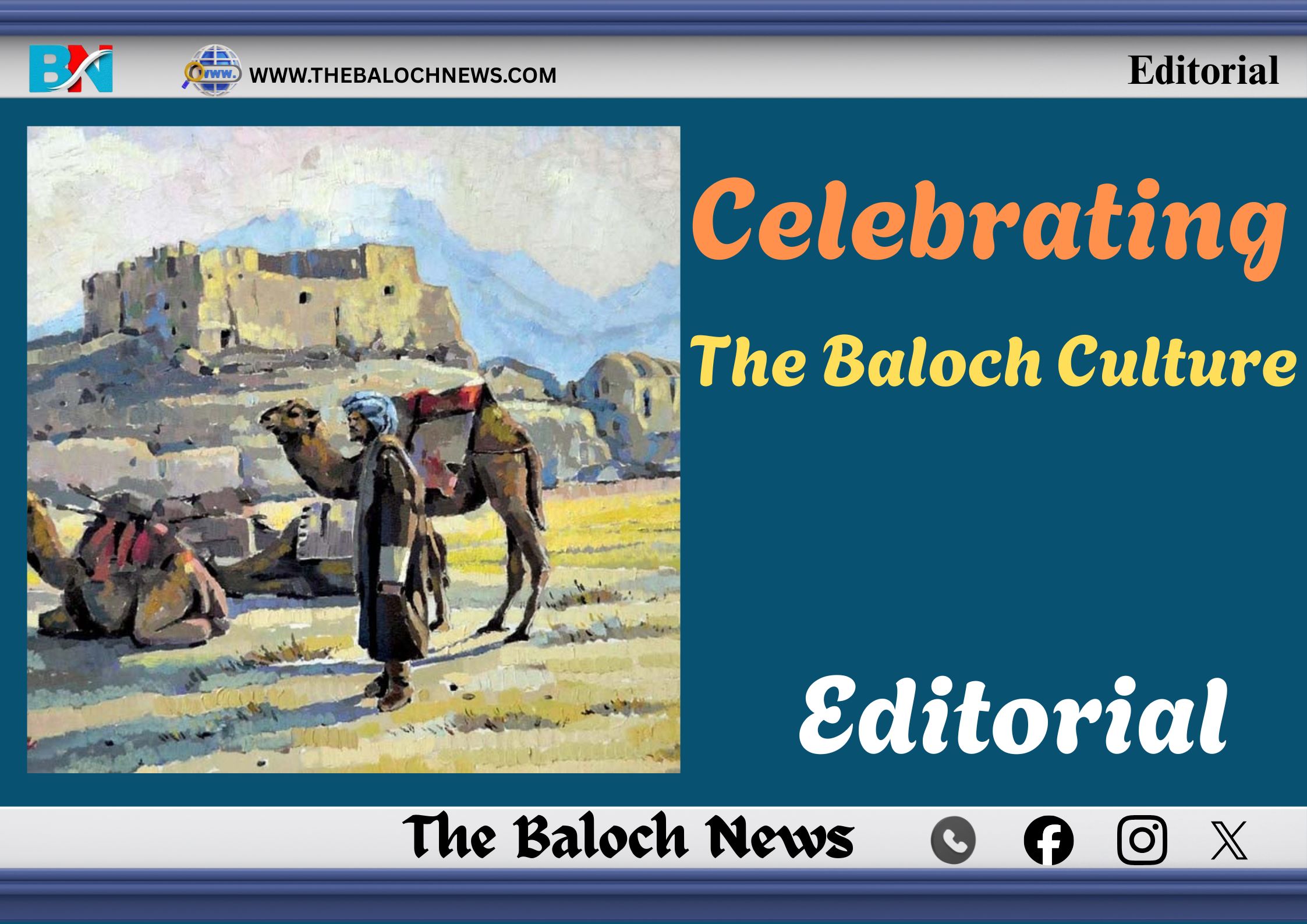
Editor’s note: To celebrate the Baloch Culture Day, we call for write-ups concerning Baloch Culture until March 2. You can email us your pieces at [email protected]
Baloch are rich in culture with its multiple languages, unique lifestyle, variety of food and desserts, vibrant clothing, morale psyche, cultural heritage, amusing poetry, music and folklores, handmade crafts and pulchritudinous embroidery, melodious Sepat and the cultural dance, and indigenous resistance – and what else not. But for over decades, they are subjugated politically with their culture suppressed and national identity into forced crisis.
Based on economic and political dominations and important geostrategic region of Balochistan, the folks have received external threats for centuries: sometimes by the neighboring empires like Afghanistan and Persia (now Iran), other times by the then biggest empire, the Britain, and now under the global evil eyes and the contemporary state actors at the forefront. Following the series of international conspiracies to siege Balochistan, the indigenous people have placed the art of resistance which has eventually shaped as a Baloch national-cum-cultural trait, fighting oppressions at any face. This cultural resistance is not only meant to secure political identity but also culture, including the national languages.
A national language (or languages) is a key pillar of the development of nationalism because it holds the given national psyche. During colonization, one among the very key elements of a nation under the constant target is the language, because in a language exists a nation’s memories, history, emotions, psyche, and above all, resistance. Take, for example, the Bengali language which was overseen after the formation of Pakistan as official and national language despite its speakers being more in number.
From there, the struggle of Bengalis, particularly young students of Dhaka University backed by the activists and senior indigenous politicians, bore fruits in 1956, after four years, when they forced the state to revise their decision on the national language. With their language secured, they helped their culture being deeply rooted in them and then led them to go on to make a state of their own based on their indigenous resistance and culture. February 21, 1952, was the day when they were fired at by the Police, resulting into several casualties and injuries. The UNESCO, while acknowledging the national struggle of the Bengalis for their language, declared Feb 21 as the “International Mother Language Day” to honor the struggle of the indigenous people.
The African resistance movements greatly believed in cultural decolonization as a prime tool for political and economic restorations, hence, we find most of the African revolutionaries giving utmost significance to cultural resistance. Take, for example, African (Guinea Bissau) political leader, Amilcar Cabral, who emphasized on cultural resistance as a “crucial, dynamic weapon of resistance” against the foreign invasion. While the Palestinian author and revolutionary, Edward Said, wrote a whole book in the name of “Culture and Resistance” ensuring that cultural is best preserved for the sake of securing national or political identity.
March 2 is observed as Baloch Culture Day. The day was first observed in 2010 when the Baloch Students Organization called for it. Since then, Baloch, inside Balochistan and across borders, observe the same day as a vow to protect the Baloch culture. With the Baloch culture being secured, we can protect our national identity, collective memories, history and move forward as a nation. Whether material or non-material, we are supposed to not only practice our culture on a daily basis, but also ensure we do everything right to “make the last very first” – in the words of Frantz Fanon – when it comes to our national culture.