


We were new to literature back then. In the snowbound land of Shaal (Quetta), we stepped into the race for knowledge and awareness, almost like machines, learning how to run. Sometimes, we read poetry, poets whose verses were sweet, addictive. Their world was small: the beloved’s hair, the curve of a neck, the touch of skin. Maybe that’s how literature begins. But literature itself is much bigger, wide, strange, magical, and full of beautiful confusion. Confusion. Yes, that’s probably what we felt in those days.
One day, sitting in a noisy hotel on Abdul Sattar Road, I was reading Jaun Elia. (A friend, no, calling him a teacher feels more honest.) Abbas Hassan asked casually, “What are you reading?” That simple question changed something in me. I was drifting along the familiar stream of Urdu poetry, already imagining myself as some kind of alien being. And then, suddenly, I found myself reading Márquez’s novels, Maupassant’s stories, Mahmoud Darwish’s poems, Nizar Qabbani’s lines.
Later, again, suddenly—I began translating classical Arabic drama into Balochi. And now I stop and ask myself: Wherever did this suddenly come from? I remember now. That day, a small, caring question from my mentor saved me from tomorrow’s hopelessness. It pulled me away from the habit of complaint, from the crowd of those who only grieve and protest.
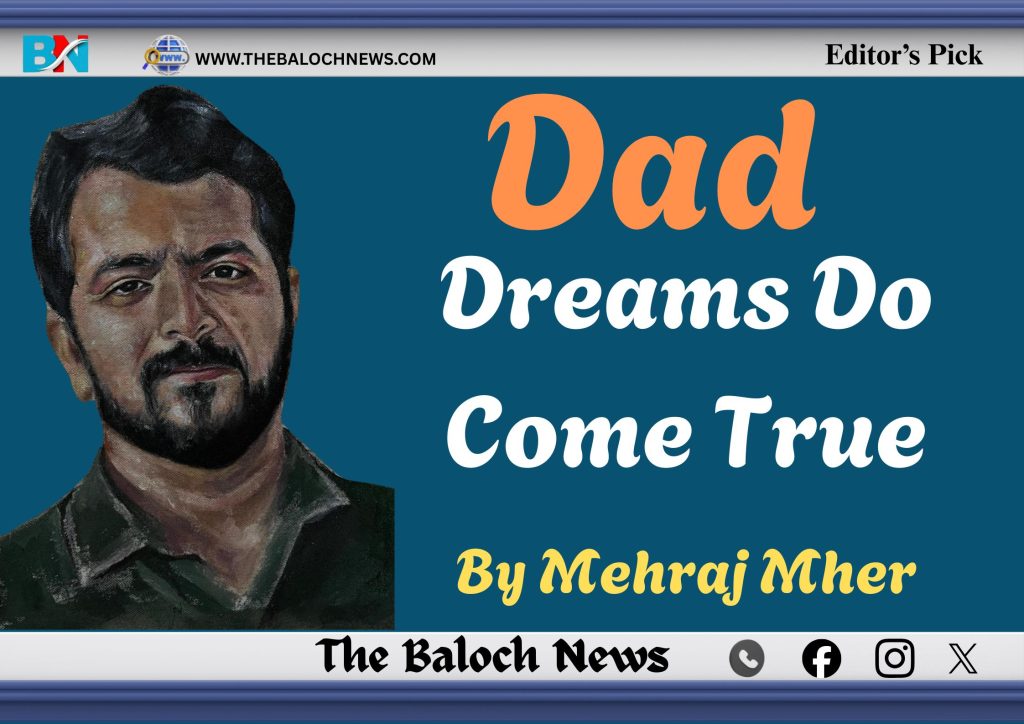
Today, when I heard the name Allah Dad, I felt a strange familiarity as if I had heard it long ago. “Dad, our close friend,” Abbas Hassan once said, “believes we must now translate much literature into Balochi.”
I never met that dreamer of golden dreams face to face. But today, when my friend praised my Balochi translation of a Mahmoud Darwish poem, I saw Dad standing right in front of me.
And smiling, without thinking, I said:
“Dreams do come true.”