


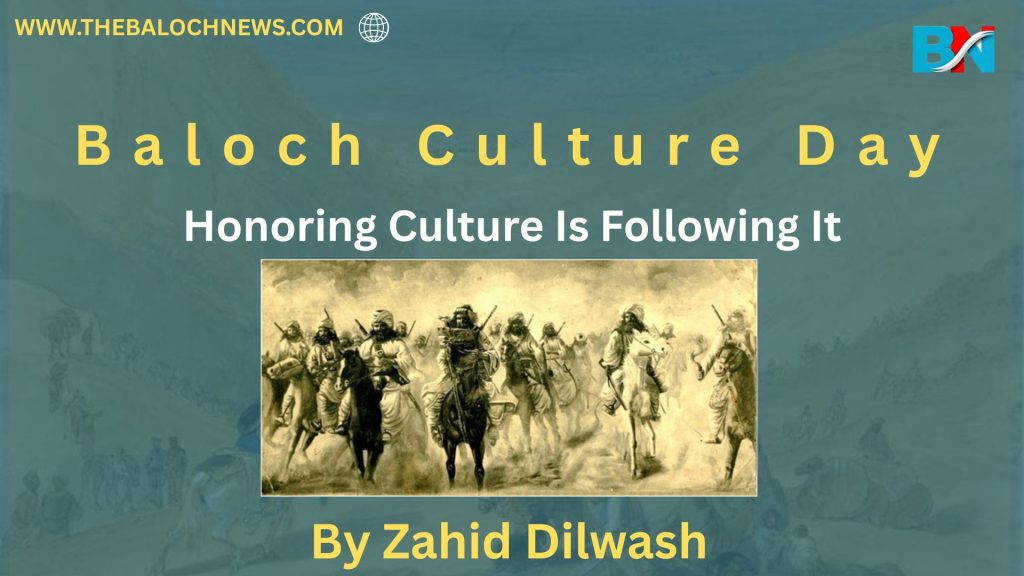
To be a Baloch is a moment of proud considering our national culture, traditions and language. The Baloch are recognized in the globe for their bravery, loyalty, hospitality, and strong sense of national honor. Our history teaches us to respect our elders, protect our identity, and stand with the truth even in difficult times. For centuries, our people have lived with dignity and courage. From 2010, we celebrate Baloch Culture Day on March 2 to show the beauty of our traditions and the richness of our culture. We wear traditional Balochi clothes, perform cultural dances like Do-Chaap, and speak about our culture and history with pride. These events remind us of who we are and where we come from.
However, an important question comes to my mind: are we truly following our culture in our daily lives, or are we only showing it on the stage?
Most of the time, we present our culture only during special programs and national or cultural days. On the stage, we proudly say that we are Baloch. We speak loudly about our honour and traditions. But outside the stage, in our daily life, we rarely practice those same values. Sometimes we even try to show that we are better than other nations or communities. In reality, true pride does not mean thinking we are superior to others. It means showing good character, respect, unity, and kindness in our everyday behaviour. Our culture teaches humility, not arrogance. And that is the point we need to understand concerning our culture.
From my point of view, we are slowly moving away from our own traditions. The Baloch nation has always been known for courage, loyalty, honesty, and strong family bonds. Sadly, today these values are becoming weaker among some people, especially the younger generation. One main reason is that we are adopting foreign cultures without protecting our own roots. Change is a part of life, but forgetting our identity is not progress.
For example, we study English and Urdu, which is good for education, communication, and jobs. I am not against learning other languages. In fact, learning different languages is important in the modern world. It helps us connect with others and succeed in our careers. But it is painful to see that many young people are not interested in learning Balochi or other Baloch national languages, which are our mother languages. We read English and Urdu books, yet we ignore Balochi books, poetry, and literature.
I have personally asked some students why they do not read Balochi books. Their reply was, “There is no scope in Balochi.” This answer surprised and saddened me. We do not need “scope” to learn our own language. We need love, respect, and responsibility. A language is not only for earning money; it is the identity and soul of a nation. It carries our history, poetry, stories, and emotions. If we lose our language, we lose a part of ourselves and our ancestors’ legacy.
In the same way, we wear modern clothes every day and keep traditional Balochi dress only for festivals or special occasions. During cultural events, many students give speeches in English or Urdu instead of Balochi. If we cannot speak our own language confidently in front of our own people, how can we say that we are truly protecting our culture?
The new generation must understand that modern education and protecting culture can go together. We can learn English for international communication and Balochi for our identity and pride. There is no conflict between progress and tradition if we manage both wisely and sincerely.
In conclusion, as a Baloch, it truly breaks my heart to see our culture slowly fading in daily life. We must not limit our culture to one day of celebration or a stage performance. Instead, we should practice it in our homes, schools, language, behaviour, and daily actions. Protecting our language, traditions, and values is our responsibility. If we do not protect our culture today, future generations may only read about it in history books instead of living it with pride.